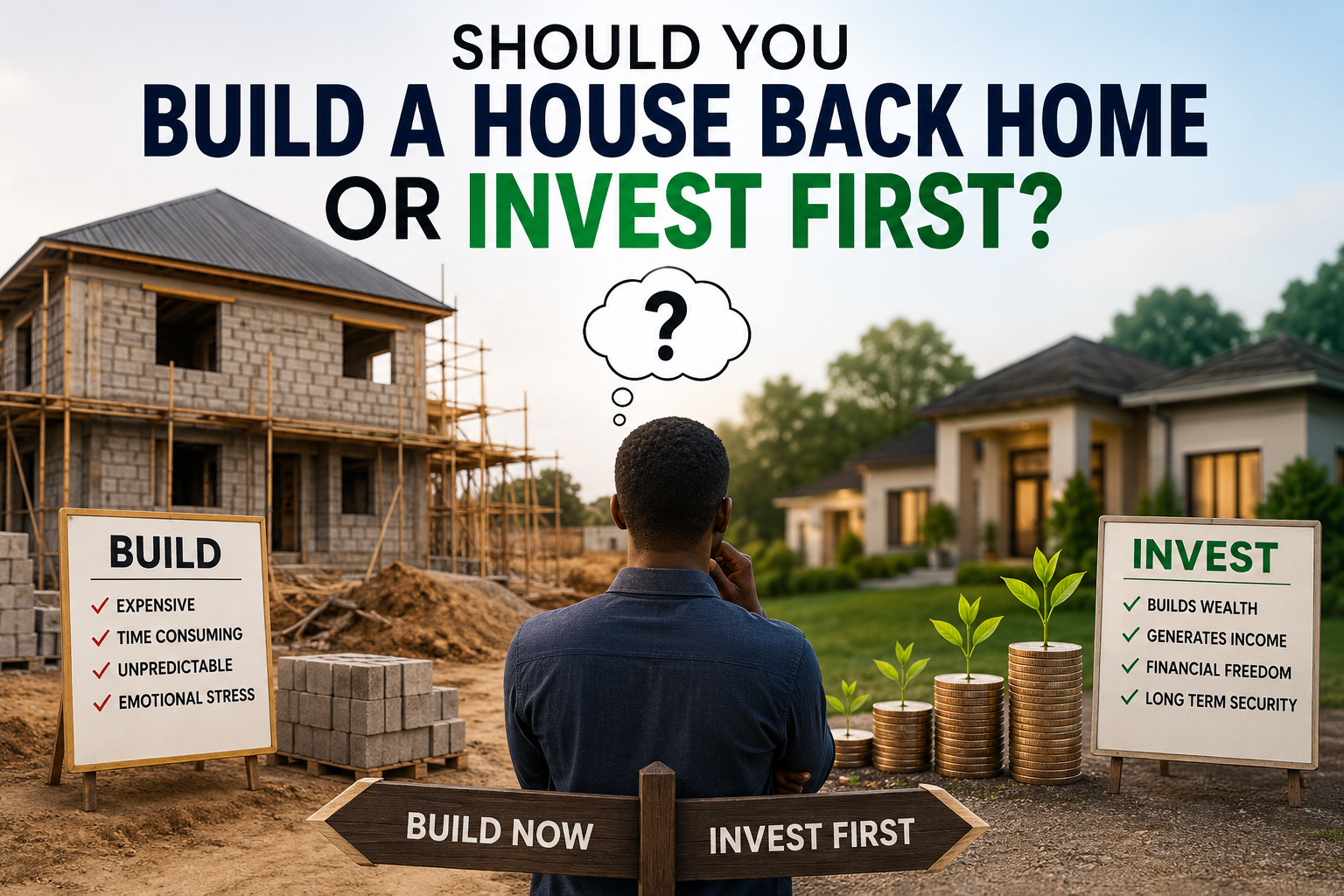
For many Africans living abroad, building a house back home feels like the ultimate sign of success. It represents stability, legacy, family pride, and a connection to home that never fades. Whether it’s a half-finished mansion visible from the roadside or a modest family home in the village, countless diasporans dream about owning property back home.
But there’s a difficult question many people avoid asking:
Should you build a house first — or invest first?
The answer could determine your long-term financial future.
The Emotional Pull of Building Back Home
For many diasporans, the pressure to build starts early.
Family members ask:
-
“When are you starting your house?”
-
“You’ve been abroad for years — what do you have to show for it?”
-
“Land prices are going up.”
-
“Renting abroad is wasting money.”
Social media adds even more pressure. Photos of completed homes, key handovers, and flashy construction projects can make it feel like everyone else is building except you.
And honestly, owning a home back home is not a bad goal at all.
The problem is when building becomes an emotional decision instead of a financial one.
The Hidden Reality of Diaspora Building Projects
Many diasporans underestimate how expensive and stressful building remotely can become.
Common challenges include:
-
Family mismanaging funds
-
Contractors disappearing
-
Constant requests for more money
-
Delays that stretch into years
-
Empty houses sitting unused most of the year
-
Security and maintenance costs
-
Imported material expenses
-
Inflation and currency fluctuations
Some people spend 10–15 years sending money into a building project while still struggling financially abroad.
In some cases, the house becomes a “wealth display” instead of a true investment.
A beautiful house that generates no income can quietly drain your finances.
Why Investing First May Be Smarter
Before committing hundreds of thousands into construction, many financial experts recommend building income-producing assets first.
Why?
Because investments can eventually pay for the house itself.
Instead of immediately pouring money into blocks and cement, consider first:
-
Building an emergency fund
-
Paying off high-interest debt
-
Investing in businesses
-
Buying rental properties
-
Starting a side hustle
-
Investing in stocks or ETFs
-
Growing retirement savings
-
Building multiple streams of income
The goal is simple:
Create cash flow before creating liabilities.
A house often costs money every year:
-
Repairs
-
Property taxes
-
Security
-
Utilities
-
Maintenance
-
Renovations
But investments can generate money every year.
That difference matters.
The “Half-House Syndrome”
Across many African countries, you’ll find unfinished homes sitting for years.
People start building based on emotion, social pressure, or temporary financial success. Then life changes:
-
Job loss
-
Immigration issues
-
Family emergencies
-
Economic downturns
-
Rising construction costs
The result is a stalled project that becomes financially and emotionally exhausting.
Many diasporans become trapped in a cycle of:
-
Work abroad
-
Send money home
-
Build slowly
-
Pause construction
-
Repeat
Meanwhile, they delay investing in assets that could improve their long-term financial stability.
When Building a House Does Make Sense
Building back home can absolutely be a smart decision if:
-
You already have stable savings and investments
-
You plan to relocate permanently
-
The property will generate rental income
-
You have trusted oversight on the ground
-
You’ve created a realistic budget
-
The project will not destroy your financial stability abroad
The key is balance.
A home should complement your financial future — not consume it.
A Better Approach: Invest and Build Strategically
Instead of rushing into a massive dream house, many diasporans are finding smarter alternatives:
-
Buy land first and hold it
-
Build gradually in planned phases
-
Start with a duplex or rental units
-
Invest abroad while preparing for future construction
-
Build a smaller, manageable home instead of a luxury mansion
-
Prioritize income-generating property
Some are even choosing to invest first and let investment returns help finance construction later.
That approach reduces stress and creates more long-term security.
The Question You Should Ask Yourself
Before starting construction, ask yourself:
“Is this house improving my financial future — or just proving something to other people?”
“Is this house improving my financial future — or just proving something to other people?”
That question alone can save years of financial pressure.
Final Thoughts
Building a house back home is a dream worth pursuing. There is nothing wrong with wanting a place to call your own.
But financial freedom should come before appearances.
A completed house without savings, investments, or stable income can become a burden instead of a blessing.
Sometimes the smartest move is not building immediately — but building wisely.
And for many diasporans, investing first may be the foundation that makes the dream home truly sustainable.
Stay connected to the community
Explore more community stories and events and keep an eye on new activity across Diasfrica.
Share this story
Send this article to a friend, group chat, or community organizer who may find it useful.
Pass it along
Share this with someone interested
If this story would help a friend, organizer, or someone in your community, send it their way.
Explore more on Diasfrica
Turn this story into your next plan
Follow the most useful next step: discover events, find trusted vendors, browse city guides, or bring your own listing into the community.
Related events
Move from reading into current event discovery.
Related vendors
Find businesses and services that match the topic.
City guides
Use local guides to explore city-level activity.
Community pages
Browse community hubs connected to this article.
Hosting something soon?
Publish the event so readers can discover it while interest is fresh.
Submit your eventRun a diaspora business?
List your business so event hosts and readers can find you.
List your business
Comments
Logged-in members can leave text-only comments. First comments may wait for moderation.
Loading comments...
Checking your sign-in status...